

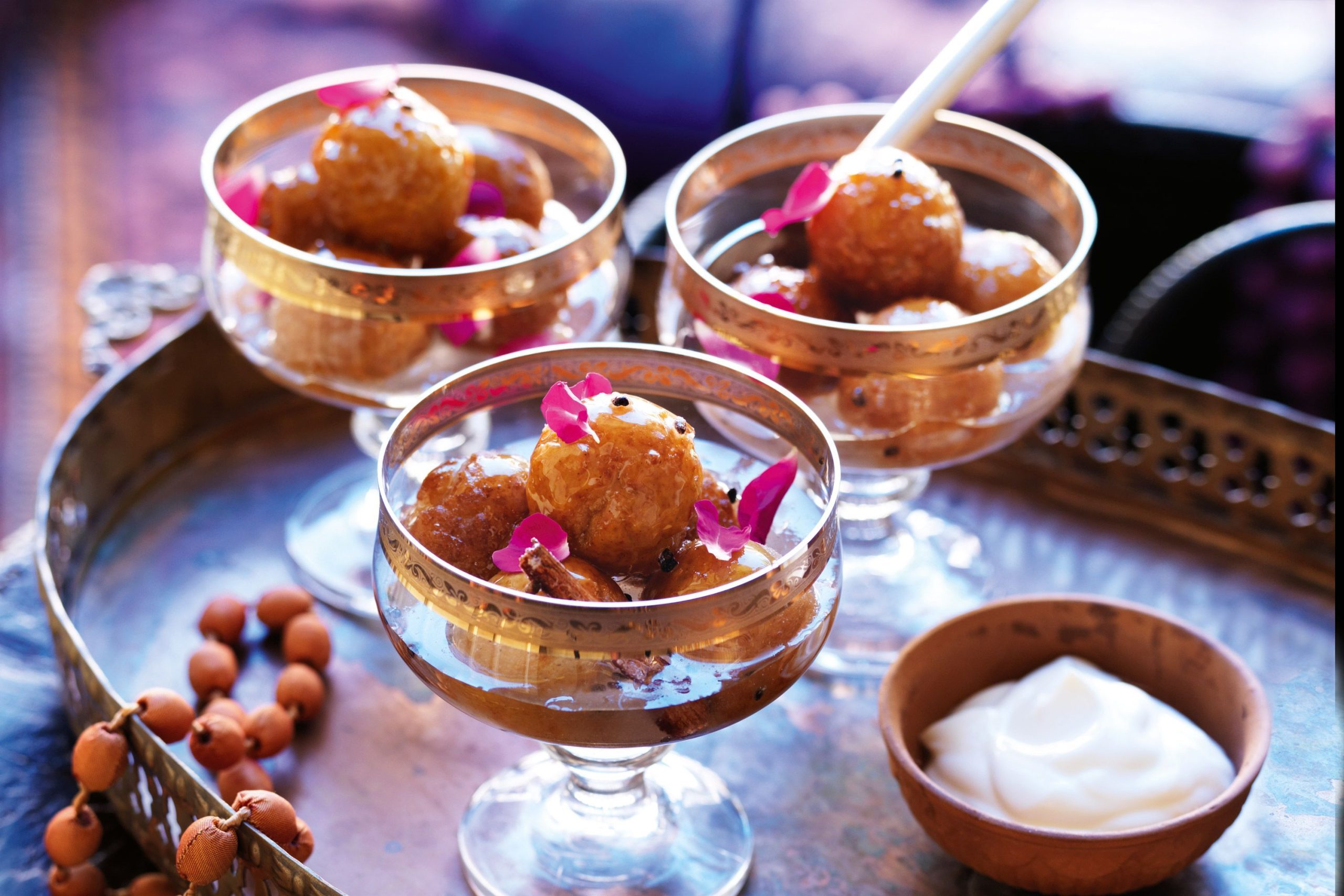
lagourmandinerhumerie.com – Gulab jamun is one of the most iconic and beloved desserts in Indian cuisine and across South Asia. These deep-fried dough balls, made from milk solids (khoya or milk powder), are soaked in a fragrant sugar syrup infused with cardamom, rose water, or saffron, resulting in a soft, spongy texture and an irresistibly sweet flavor. The name “gulab jamun” comes from Persian roots: “gulab” meaning rose water, and “jamun” referring to the java plum fruit, which the balls resemble in size and shape. Served warm or at room temperature, gulab jamun is a staple at festivals like Diwali and Eid, weddings, and celebrations. Its popularity has spread globally, appearing in Indian restaurants worldwide and even inspiring variations in other cultures.
Origins and History of Gulab Jamun
Gulab jamun traces its roots to ancient Persian and Arab sweets, introduced to India during the Mughal era in the 16th century. It evolved from a Middle Eastern treat called luqmat al-qadi (fried dough in syrup). In India, it adapted with local ingredients like khoya, becoming a symbol of indulgence and hospitality.
Over centuries, regional variations emerged: in North India, it’s softer and rose-flavored; in Bengal, a similar version called “pantua” or “ledikeni” exists. Today, instant mixes make it accessible for home cooking, while halwais (sweet makers) craft artisanal versions for special occasions.
Ingredients and How Gulab Jamun Is Made
Traditional gulab jamun uses:
- Khoya (reduced milk solids) or milk powder as the base.
- Flour, semolina, or paneer for binding.
- Ghee or oil for frying.
- Syrup: Sugar, water, cardamom pods, saffron strands, and rose water/kewra essence.
The process:
- Knead the dough into a soft, crack-free consistency.
- Shape into small, smooth balls (avoid cracks for even absorption).
- Deep-fry on low-medium heat until golden brown.
- Soak in warm, flavored syrup for hours (or overnight) until fully absorbed.
Modern shortcuts use milk powder mixes like Gits or Haldiram’s for quick preparation.
Variations and Serving Styles
- Classic: Plain with syrup, garnished with pistachios or almonds.
- Stuffed: Filled with nuts, cardamom, or mawa.
- Regional: Kala jamun (darker, caramelized), or dry jamun without syrup.
- Fusion: Gulab jamun cheesecake, ice cream, or with rabri (thickened milk).
Best served warm, often with vanilla ice cream for contrast.
Nutritional Aspects (with Moderation in Mind)
Gulab jamun is energy-dense: rich in carbs from sugar and fats from frying/ghee, providing quick energy. Milk solids offer protein and calcium. However, it’s high in calories (150-250 per piece) and sugar—enjoy as an occasional treat. Healthier versions use baking or air-frying and reduced sugar.
Where to Enjoy Gulab Jamun
In India/Pakistan/Bangladesh: Iconic sweet shops like Haldiram’s, Bikanervala, or local mithaiwalas. Globally: Indian restaurants often feature it on dessert menus. At home: Easy with instant mixes for authentic taste.
Gulab jamun embodies the essence of Indian sweets: indulgent, aromatic, and heartwarming. From festive thalis to simple tea-time treats, its melt-in-your-mouth texture and floral sweetness make it timeless. Whether classic or fusion, one bite is enough to understand why it’s adored across generations. Next celebration, treat yourself to gulab jamun—pure bliss in every spoonful!